

About Us
MESSAGE FROM THE DIRECTOR
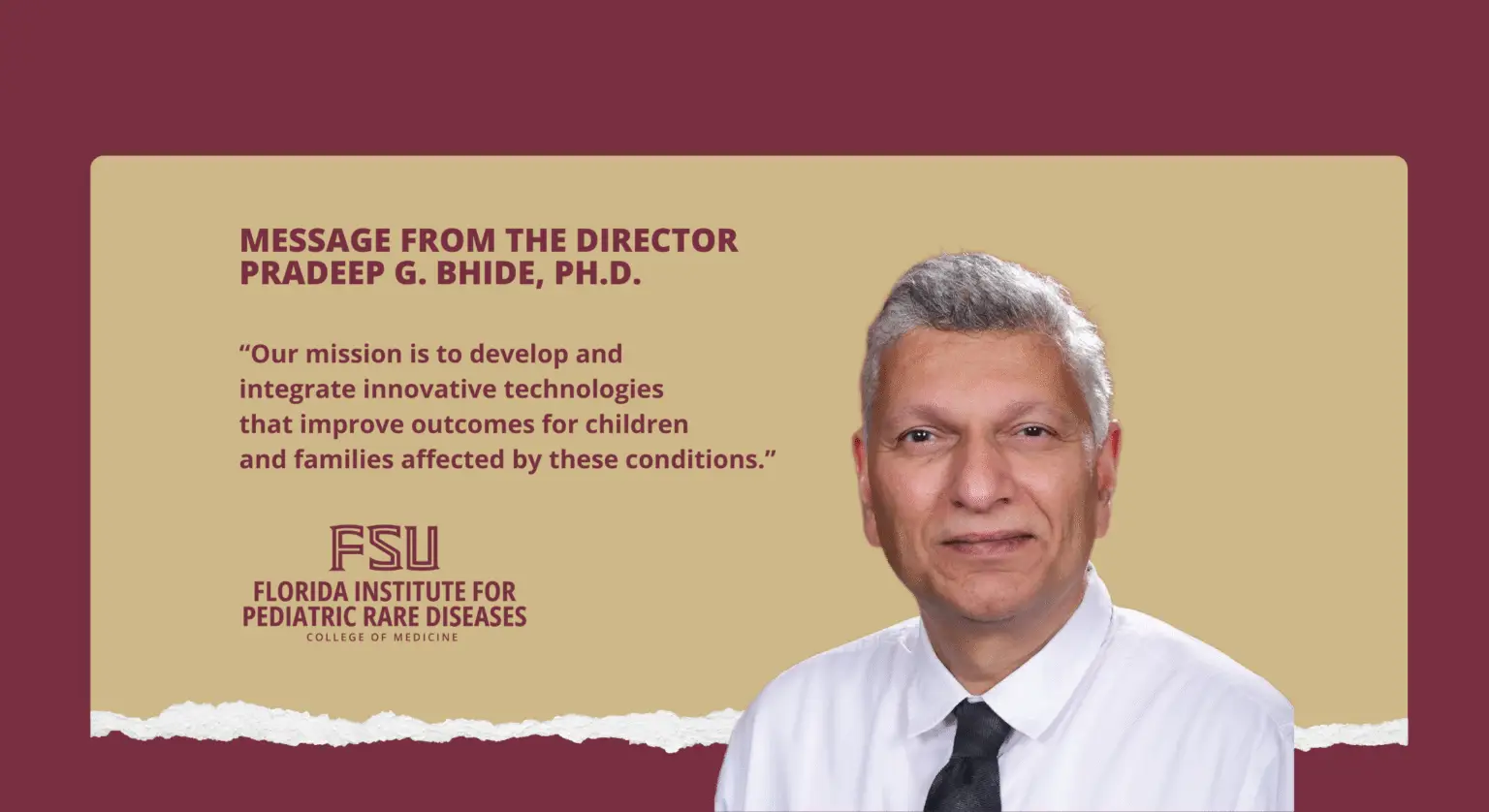
Message from the Director
Pradeep G. Bhide, Ph.D.
Director, Florida Institute for Pediatric Rare Diseases
The Florida Institute for Pediatric Rare Diseases (IPRD) takes a comprehensive and strategic approach to advancing the diagnosis and treatment of rare diseases. Our mission is to develop and integrate innovative technologies that improve outcomes for children and families affected by these conditions.
The Institute’s programs span a pediatric health center, genomic research and diagnostic services, a graduate program in genetic counseling, and a range of rare disease research initiatives. Our multidisciplinary team of clinicians and scientists works collaboratively to develop new solutions for the prevention, treatment, and management of rare diseases through research, clinical innovation, public outreach, and education.
In 2025, the Florida Legislature enacted the Sunshine Genetics Act, establishing a landmark partnership between Florida State University and the State Legislature to advance genomic medicine for children across Florida. Under this initiative, IPRD serves as the hub of the statewide newborn genomic sequencing program, enabling early diagnosis and intervention for genetic conditions and positioning Florida as a national leader in precision medicine and pediatric health.
ANDREW’S STORY
Andrew Anderson suffered from Tay-Sachs disease, an ultrarare fatal genetic disorder with only 16 cases annually nationwide. Andrew passed away at just 4 years old. Since then, Andrew's parents, Florida Representative Adam Anderson (R-Palm Harbor), and Brianne Anderson, and their family have been leading the drive to advance research in rare diseases here in Florida across the nation.
The Florida Institute for Pediatric Rare Diseases stands as a tribute to Andrew's story and the dedication of a family to do everything possible so that no other child or parent must feel helpless when faced with a rare disease diagnosis.
ABOUT THE INSTITUTE
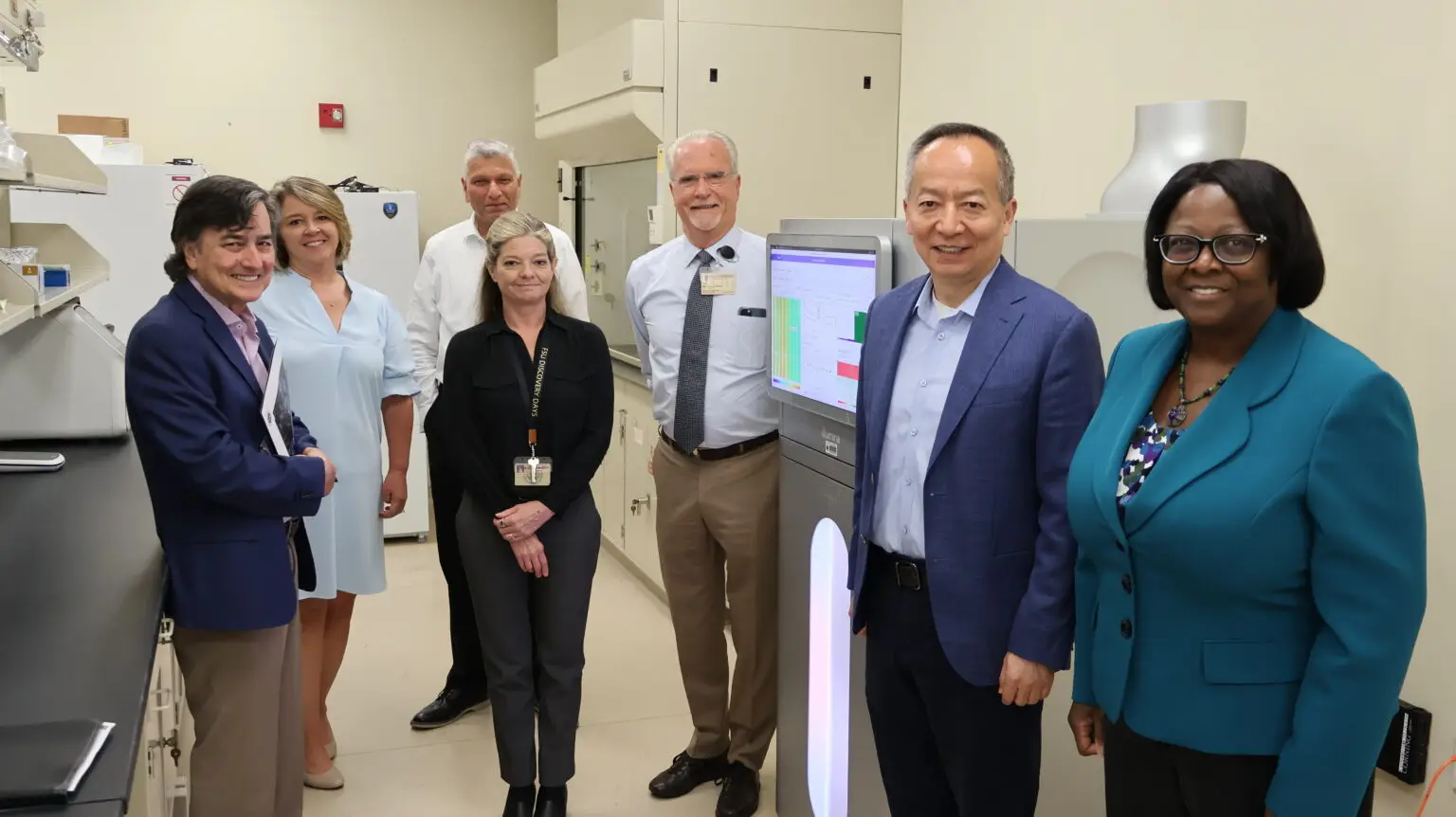
In July 2023, Florida Governor Ron DeSantis signed into law a state budget appropriation establishing the Florida State University Institute for Pediatric Rare Diseases (IPRD). This visionary appropriation was championed by Florida Representative Adam Anderson (R-Palm Harbor), whose leadership and commitment to improving the lives of children with rare diseases have been instrumental in creating and sustaining this statewide resource.
FSU formally launched the Institute on February 1, 2024, during FSU Day at the Capitol, marking a historic milestone in the university's mission to advance biomedical innovation and child health. Pradeep Bhide, Ph.D., the Jim and Betty Ann Rodgers Eminent Scholar Chair of Developmental Neuroscience, was appointed as the Institute’s inaugural director.
The Institute has swiftly launched a series of landmark initiatives in pediatric rare disease research, clinical care, genomics, and education. These efforts include building statewide partnerships in precision medicine, establishing the Sunshine Genetics newborn genomic sequencing program, and developing innovative training and research programs designed to prepare the next generation of scientists, clinicians, and healthcare professionals dedicated to improving the lives of children with rare diseases.
ABOUT PEDIATRIC RARE DISEASES
Roughly 80% of rare diseases have a genetic origin, caused by changes, or variants, in a gene or chromosome. These variants may be inherited from a parent or may arise spontaneously during a child’s development.
The remaining rare diseases may result from non-genetic factors, such as infections, autoimmune disorders, certain cancers, environmental exposures or complex interactions between genes and environment. In many instances the precise cause remains unknown, driving ongoing scientific discovery and innovation.
While each rare disease may affect only a limited number of individuals, some are more widely recognized than others. Examples include:
- Cystic Fibrosis – a genetic disorder affecting the lungs and digestive system, with approximately 30,000 individuals in the United States.
- Sickle Cell Disease – an inherited blood disorder affecting about 100,000 Americans, primarily of African American and Hispanic descent.
- Duchenne Muscular Dystrophy – a progressive muscle-wasting disorder occurring in roughly one in 3,500 male births.
- Spinal Muscular Atrophy (SMA) – a genetic neuromuscular disorder that has become one of the first conditions treated successfully through gene therapy.
- Primary Biliary Cholangitis (PBC) – a rare autoimmune liver disorder affecting about 65,000 individuals in the United States.
These conditions represent only a fraction of the rare disease spectrum, yet they illustrate the extraordinary scientific progress possible through focused research and sustained collaboration.
Treatment availability for rare diseases remains an area of urgent need. Approximately 95 % of rare diseases lack an approved treatment. Nevertheless, significant advances are emerging in several areas:
- Enzyme-replacement and protein-replacement therapies for conditions involving missing or defective enzymes.
- Small-molecule drugs and biologics that correct or compensate for dysfunctional pathways.
- Gene therapy and gene editing, which aim to repair or replace defective genes.
- Cell-based and RNA-based therapies, which represent a rapidly growing frontier.
- Supportive and multidisciplinary care, providing vital quality-of-life improvements when curative options are not yet available.
The IPRD and its collaborators are helping accelerate development of innovative therapies for children affected by rare and often devastating diseases by advancing clinical and translational research.
Everyone can play a role in improving the lives of children and families affected by rare diseases.
You can help by:
- Raising awareness about pediatric rare diseases and the importance of early diagnosis and research.
- Participating in advocacy by supporting policies that expand access to genomic screening, accelerate rare disease research and promote equitable healthcare.
- Supporting our programs through philanthropic contributions that directly fund discovery, diagnosis and treatment initiatives for children with rare diseases.
Every act of support, whether scientific, clinical, educational or philanthropic, advances the mission of the IPRD to bring hope and healing to affected children and families in Florida and beyond.
RARE DISEASE RESEARCH AND AWARENESS IN FLORIDA
Florida Senate Bill 272, signed into law by Governor Ron DeSantis on June 21, 2021, established Section 381.99, Florida Statutes, creating the Florida Rare Disease Advisory Council (RDAC). Florida became the 19th state in the nation to enact such legislation.
The RDAC unites representatives from state agencies, healthcare providers, research institutions, patient advocacy groups, insurers, and the biopharmaceutical industry, along with individuals living with rare diseases and their caregivers. The Council advises the Florida Department of Health and other state agencies on policies and strategies to improve diagnosis, treatment, and quality of life for those affected by rare conditions.
Florida Representative Adam Anderson (R–Palm Harbor) has played a pivotal role in advancing the state’s investment in rare disease innovation. His leadership led to the creation of the Rare Pediatric Disease Research Grant Program within the Florida Department of Health—the first program of its kind in the state.
This initiative provides competitive grant funding for innovative approaches to understanding, diagnosing, and treating pediatric rare diseases. It has positioned Florida as a model for how states can stimulate translational research and support academic-clinical partnerships that accelerate discovery. Representative Anderson’s vision and sustained advocacy continue to keep Florida at the forefront of biomedical innovation and child health.
Signed by Governor Ron DeSantis as part of the 2025 Florida State Budget, the Sunshine Genetics Act authorizes a groundbreaking pilot program to perform whole-genome sequencing on newborns across Florida. The initiative will identify genetic variants associated with rare pediatric conditions before symptoms appear, allowing for early diagnosis, targeted treatment, and improved long-term health outcomes.
The Act designates the IPRD at Florida State University as the statewide coordinating hub for the pilot program, working in partnership with the Florida Department of Health and a network of leading clinical and academic institutions across the state.
The Sunshine Genetics pilot program will also serve as a foundation for expanding genomic newborn screening statewide, integrating research, public health, and clinical care to create a sustainable model of early rare disease detection and prevention.
Representative Anderson has also championed efforts to raise awareness of rare diseases in Florida:
- House Resolution 8005 recognized August 10, 2023, as Tay-Sachs Disease Awareness Day in Florida.
- House Resolution 8049 recognized February 28, 2023, as Rare Disease Day in Florida.
Both resolutions were unanimously adopted by the Florida House of Representatives on April 26, 2023, reaffirming the state’s commitment to supporting affected families and advancing understanding of rare genetic disorders.
At the federal level, Congressman Gus Bilirakis (FL–12) has been a long-standing champion of national rare disease policy. He has played a key role in strengthening and modernizing the Orphan Drug Act, which since its passage in 1983 has transformed rare disease therapy development in the United States.
Before the Act’s implementation, the U.S. Food and Drug Administration (FDA) had approved only 38 rare disease therapies. Between 1983 and 2022, that number grew to more than 1,100, providing life-changing treatment options and renewed hope for millions of patients.