

RARE DISEASE RESEARCH & TRAINING
Our research program is focused on discovering and developing technologies for the diagnosis and treatment of a broad spectrum of rare diseases. The Institute awards milestone-based funding to support research projects. Research grant applications are invited twice a year and reviewed by the Institute’s Research Advisory Council. The council performs peer-review of grant applications, monitors progress, and offers advice and assistance to award recipients during the post-award period. The Council is also responsible for performing periodic reviews of the Institute’s Rare Disease Research Grant Program priorities.
Research Advisory Council Members:

Pradeep G. Bhide, Ph.D., is the Director of the IPRD, and the Jim and Betty Ann Rodgers Eminent Scholar Chair of Developmental Neuroscience at FSU. Dr. Bhide’s research spans developmental neurobiology, neurodevelopmental disorders, prenatal nicotine and other drug exposures, focusing primarily on the genetic and cellular mechanisms shaping brain development. Dr. Bhide previously served on the faculty of Harvard Medical School and Massachusetts General Hospital, Boston, MA where he conducted research on neurodevelopmental disorders. Dr. Bhide provides strategic, scientific, and administrative leadership for the IPRD, guiding its vision, growth, and national impact.
Full Bhide Profile
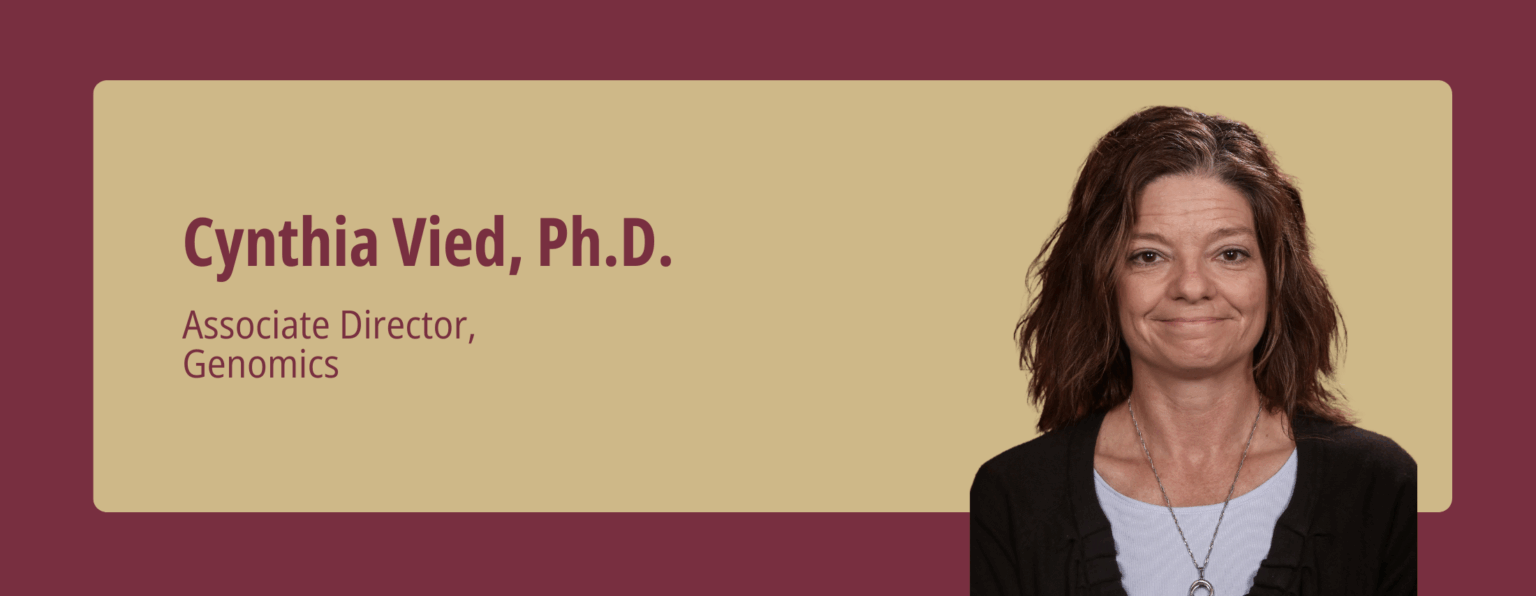
Cynthia Vied, Ph.D., serves as Associate Director for Genomics at the IPRD. She provides scientific, operational, and strategic leadership for IPRD’s CLIA–CAP whole genome sequencing diagnostic laboratory, where she oversees genome sequencing workflows, quality systems, and data analysis pipelines. With a Ph.D. in Biochemistry & Molecular Genetics from the University of Alabama at Birmingham and post-doctoral training at Columbia University, New York, NY, Dr. Vied brings extensive experience in next-generation sequencing, multi-omics technologies, and translational genomics. Since joining FSU, she has been central to building the institution’s genomics infrastructure and plays a key role in advancing rare-disease diagnostics and research through innovative sequencing, bioinformatics, and laboratory leadership.
Full Vied Profile

Michelle Arbeitman, Ph.D., serves as Associate Director for Research & Training Programs at the IPRD, where she leads development of the institute’s educational, mentorship, and translational research-training platforms. A Professor of Biomedical Sciences, Dr. Arbeitman investigates the genetic basis of reproductive and social behaviors in model organisms and applies these foundational insights to pediatric rare-disease contexts. She leads the IPRD’s Rare Disease Research Grant Awards Program, overseeing the institute’s investment in innovative basic, translational, and clinical research. Her responsibilities include developing the Master’s Program in Genetic Counseling, fostering cross-disciplinary experiential opportunities, and strengthening research-translation pipelines that bridge foundational science with clinical impact.
Full Arbeitman Profile

Antonia A. Nemec, Ph.D., serves as Associate Director for Research Operations at the IPRD. In this leadership role she oversees and coordinates the institute’s expanding research portfolio aligning its activities with institutional strategy and operational excellence. Dr. Nemec earned her Ph.D. in Molecular Toxicology from the University of Pittsburgh, PA and completed post-doctoral training at Yale University School of Medicine, New Haven, CT. Since joining FSU in 2015 as an assistant professor in the Department of Biomedical Sciences, she has distinguished herself as an educator, researcher and mentor, earning multiple honors including the Outstanding Junior Faculty Educator Award and the Mentor of the Year Award from the Florida Undergraduate Research Association. With a strong background in proteasome biogenesis, DNA repair and molecular toxicology, Dr. Nemec brings scientific rigor, operational leadership, and student-training excellence to her role, helping to build IPRD as a leading center in pediatric rare-disease research.
Full Nemec Profile

Richard S. Nowakowski, Ph.D., is the Randolph L. Rill Professor at the Florida State University College of Medicine. A Harvard-trained developmental biologist and Fellow of the AAAS, his distinguished career includes significant tenure at UMDNJ-Robert Wood Johnson Medical School and the Max Planck Institute. His research focuses on the genetic regulation of neuronogenesis, the cell cycle in the developing retina, and hippocampal phenomics. Beyond the lab, Nowakowski is a prominent leader in the scientific community, having chaired multiple NIH study sections and serving as a Senior Editor for Developmental Neuroscience.
Full Nowakowski Profile
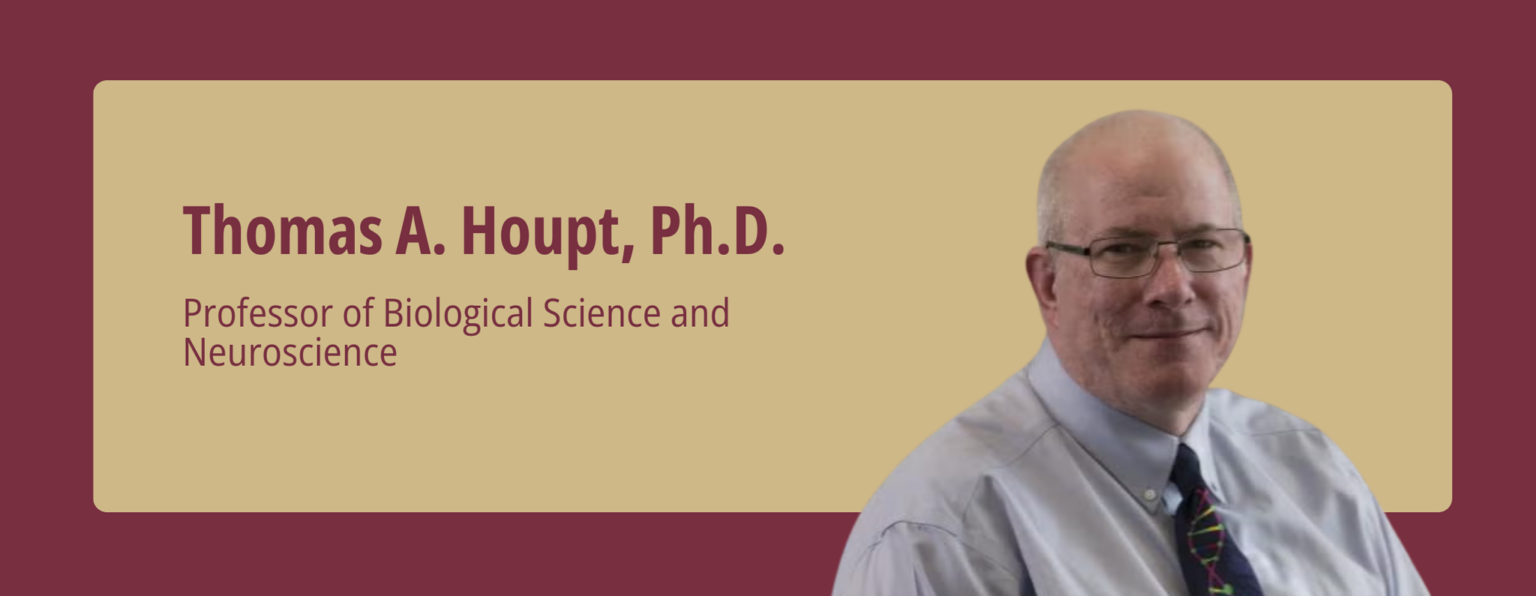
Thomas A. Houpt serves as a Professor of Biological Science and Neuroscience. He received his Ph.D. from Harvard University in 1991. His work involves the use of conditioned taste aversion to explore the molecular, neurological, and behavioral aspects of learning and memory.
Full Houpt Profile